
How to use lifting straps, from wrist loop to bar
Feed the long tail through the small end loop, slip the resulting loop over your wrist and wrap the tail around the bar. Close your hand over the strap, then take out the slack. This guide walks through that setup for standard lasso lifting straps.
SQUATRAT · Product guide
Before your first attempt
Set out a pair of straps and an unloaded bar resting securely in place. Check the webbing and stitching. The strap should lie flat and move freely. Practise setting up both hands and releasing the straps before starting a training set. Follow any instructions supplied with your particular model.
1. Make the wrist loop
Feed the long, loose tail through the small sewn loop at the other end. This creates an adjustable opening for your hand. Slide your hand through and settle the strap around your wrist. It should sit close to the wrist without digging in uncomfortably.
2. Point the tail towards your thumb
The loose tail should run along the inside of your hand towards your thumb and palm. Put the second strap on as a mirror image of the first. On both hands, the tail should point towards the palm. Smooth out any twists. With a padded strap, the padding sits at the wrist loop.
3. Wrap under and around the bar
For the overhand grip described here, place your hand over the bar. Take the strap tail underneath the bar first, then around it. Keep the material flat and close your hand over the strap. The bar now sits between your palm and the strap. This is a clearer way to check the direction than clockwise or anticlockwise, which changes with the hand and your viewpoint.
4. Take up the slack and set up the other hand
Hold the bar and adjust your grip until no loose loop hangs between your wrist and the bar. A small rolling movement of the hand can help. Start with one flat wrap. Whether another wrap is needed depends on the strap, bar and grip. Try setting up your less dexterous hand first so your free hand can help wrap it.
5. Check the fit and release after the set
Use the unloaded bar to check that both sides sit evenly and that you can hold and release your grip. After a set, put the weight down fully. Then open your hands and unwrap the straps. Repeat the setup slowly until the second hand feels manageable too.
If the strap slips or twists
| What you notice | What to check first |
|---|---|
| The strap loosens when you grip | On the unloaded bar, check that the tail went under the bar first and that your hand closes over the strap. |
| There is a loose gap between hand and bar | Adjust your grip and take up the slack before applying load. |
| A twisted edge sits against the wrist | Put the strap on again and smooth the material flat. |
| The second hand is awkward to wrap | Start with that hand and use your free hand to help. Practise setting up the other side without training weight. |
Using straps for deadlifts and rows
Lifting straps can help during pulling exercises when your grip limits the set. For deadlifts, practise the wrap with an overhand grip. For rows, use the actual bar or handle you train with. Its diameter and the space available affect how much strap can sit around it, so check the fit on that piece of equipment.
For the distinction between straps and wrist wraps, read the lifting straps versus wrist wraps guide.
Choosing cotton, silicone grip or leather
All three SQUATRAT lifting straps measure 60 × 4 cm laid flat. Both cotton models use 100% cotton webbing with neoprene wrist padding. The padded section is 15 cm long and 7 mm thick on both versions. One also has silicone grip print on the contact side. The cowhide leather straps have no added padding.
Compare all three models in the lifting straps collection.
If you are still choosing between constructions, use the lifting strap and grip pad selector.
Common questions about wrapping
How many times should I wrap the strap? There is no fixed number for every strap and bar diameter. Check that the material lies flat, your hand closes over it and you have removed loose slack.
Do I need to wrap the entire tail? Build a grip you can control and release once the weight is down. Extra layers bunched beneath your hand make the setup unnecessarily bulky.
Which way does the silicone grip face? On the SQUATRAT silicone version, the grip print is on the contact side. Before wrapping, use the product detail photos to check how that side meets the equipment.
Products and detail views
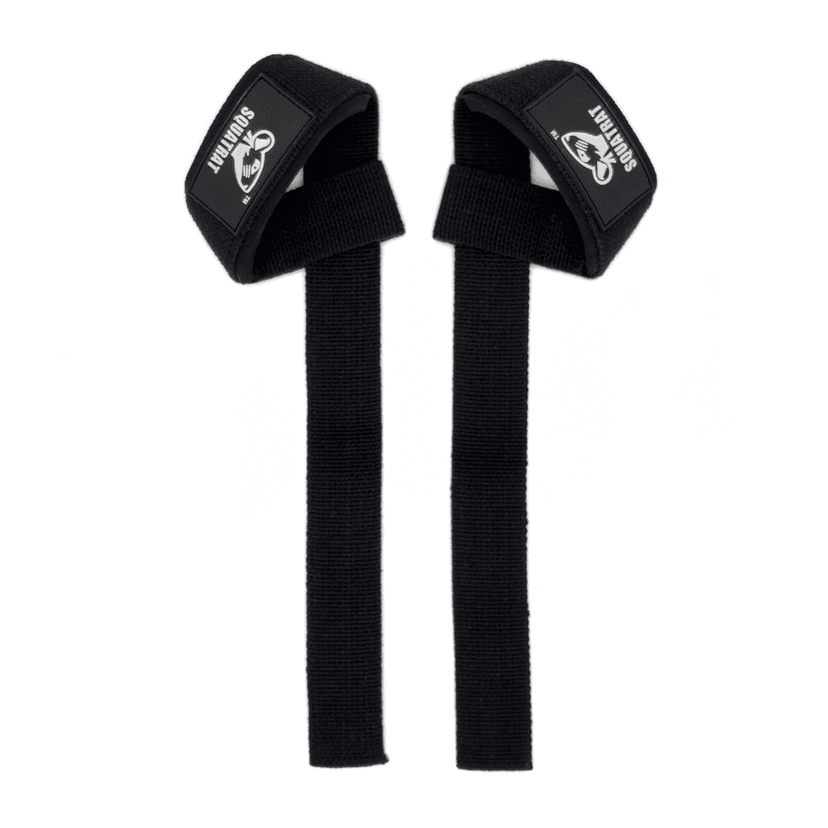
Plain Cotton Lifting Straps
Cotton-webbing lifting straps with neoprene wrist padding. Each strap measures 60 × 4 cm laid flat, without silicone grip print.
View product and options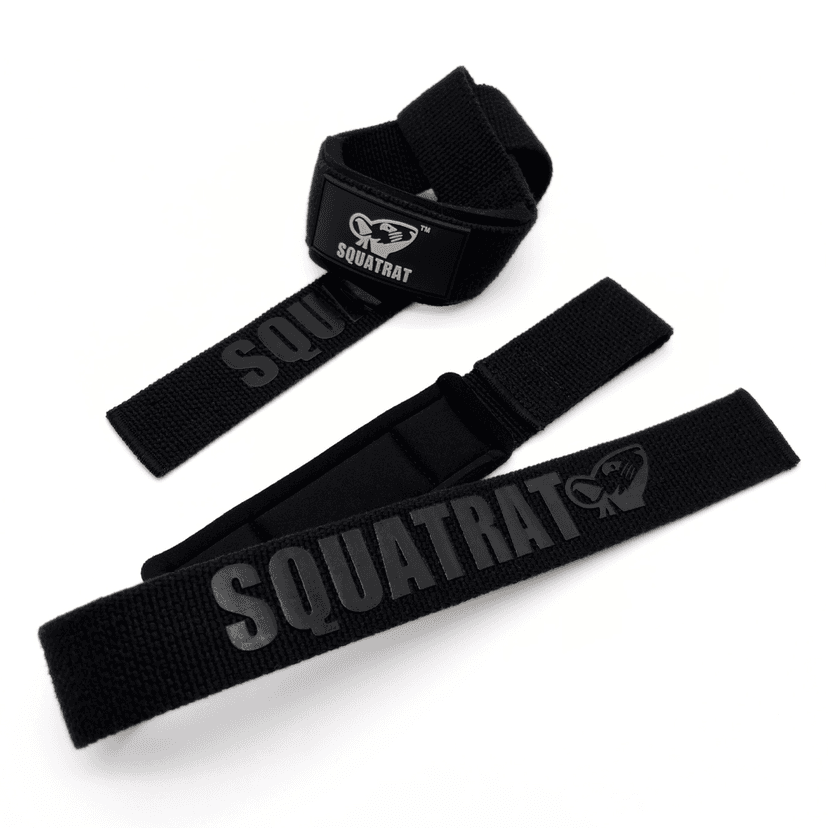
Cotton Lifting Straps with Silicone Grip
Cotton lifting straps with silicone grip print and neoprene padding. Each strap measures 60 × 4 cm laid flat.
View product and options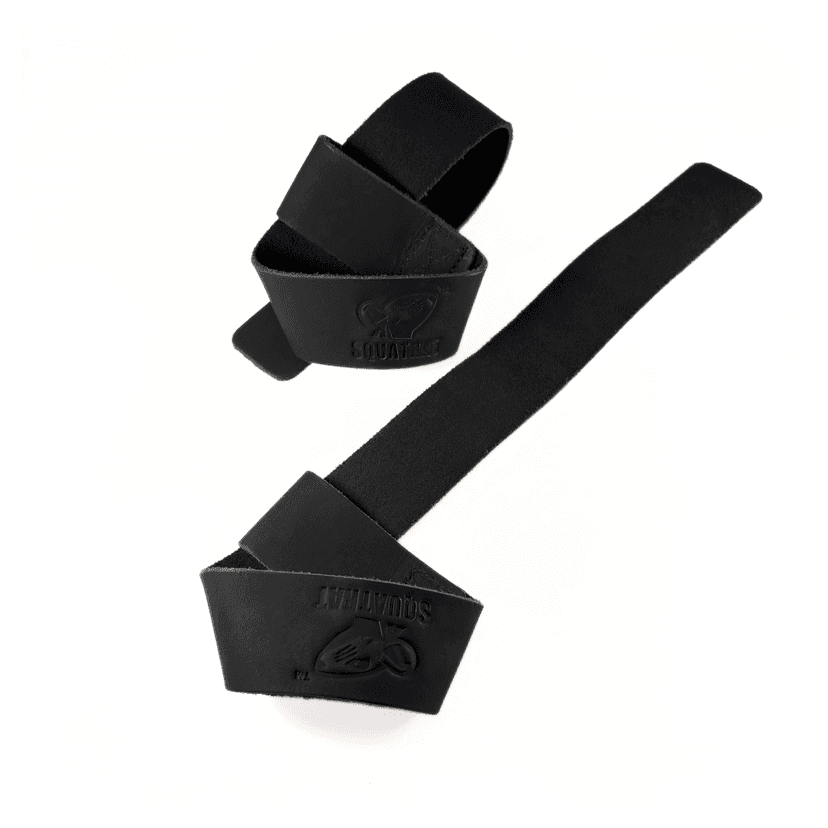
Unpadded Cowhide Leather Lifting Straps
Unpadded cowhide lifting straps for a direct leather feel. Each strap measures 60 × 4 cm laid flat.
View product and options